
Forensic Therapist: Role, Requirements, Salary and Boundaries
Understand treatment duties, licensing routes, salary evidence and the boundary between therapy and forensic evaluation.
Read article
Evidence-based explanations
Forensic psychology asks how psychological knowledge can help answer questions shaped by law. These guides explain the evidence in clear language while keeping professional boundaries, uncertainty and the people affected by each decision in view.
Explore criminal profiling, violence risk assessment, eyewitness memory and ethics. Every article begins with the practical question and builds toward the research, context and limits needed for a responsible answer.
Newest to oldest
Understand treatment duties, licensing routes, salary evidence and the boundary between therapy and forensic evaluation.
Read article
Compare training, duties, medication authority, evaluations, testimony and career fit across two distinct forensic mental-health professions.
Read article
Understand jury consulting, trial research, ethical jury-selection support, useful training and the limits of available salary evidence.
Read article
Learn what forensic social workers do, where they work, degree and licensing requirements, salary evidence and professional boundaries.
Read article
Compare evidence types, daily work, degrees, careers, licensure, salary data and career fit across two distinct forensic fields.
Read article
Understand case-management duties, work settings, education requirements, salary evidence and the boundary between coordination and psychology practice.
Read article
Compare duties, education, licensure, work settings, evidence roles and career fit across two distinct professions.
Read article
Choose a feasible research question, match it to an ethical method and find documented public U.S. justice data sources.
Read article
Compare full-time, evening and weekend schedules across courts, corrections, hospitals, government roles and private practice.
Read article
Compare the real work, training, pay evidence, job outlook, advantages and drawbacks before deciding whether forensic psychology fits your goals.
Read article
Understand how structured tools, case evidence and professional judgment support sexual recidivism risk assessment without turning a score into certainty.
Read article
Learn how multidisciplinary teams gather facts, evaluate context, plan proportionate interventions and monitor safety without relying on profiles.
Read article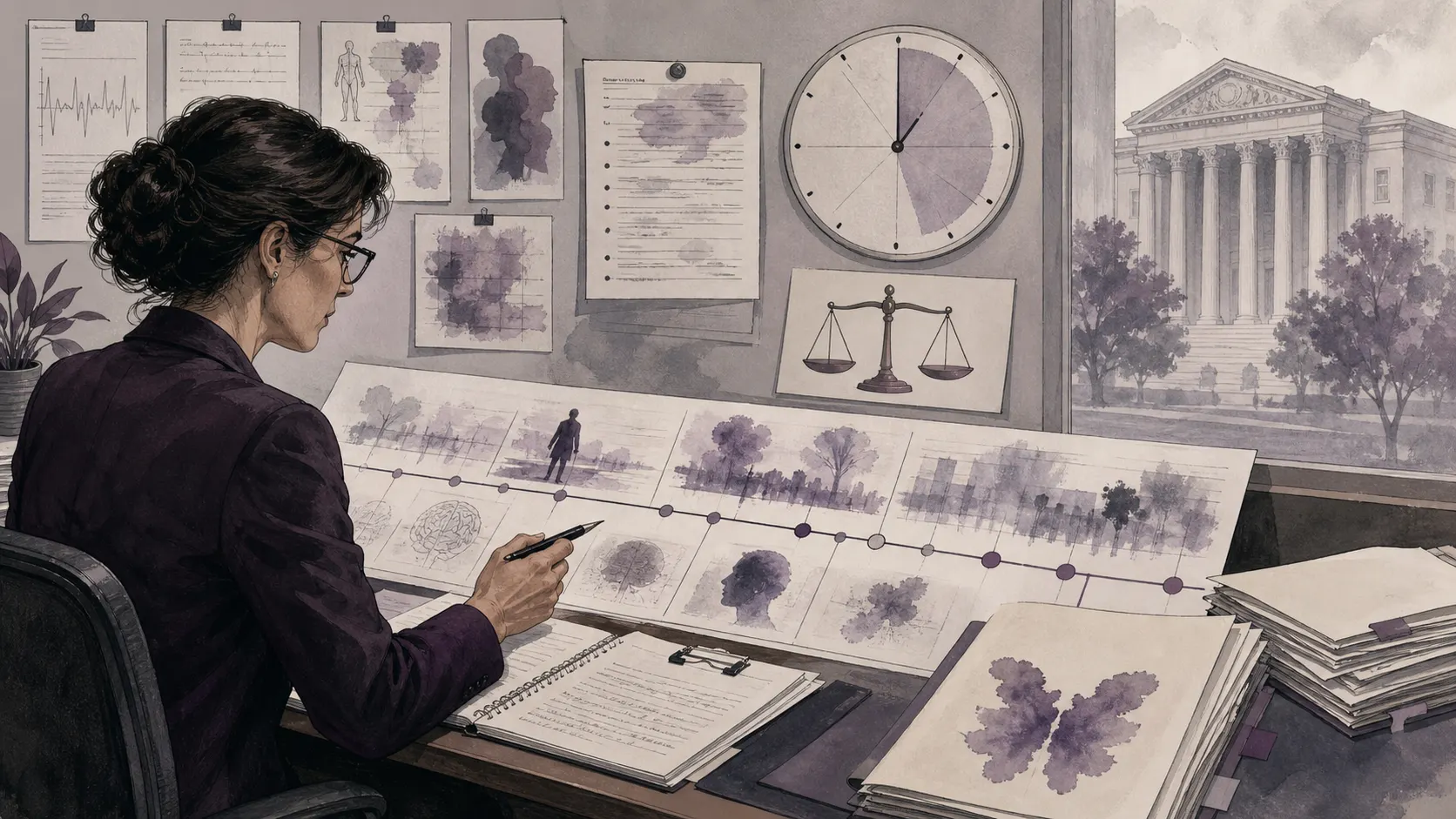
Understand legal insanity, NGRI standards, retrospective evaluation, evidence, outcomes and the difference from competency to stand trial.
Read article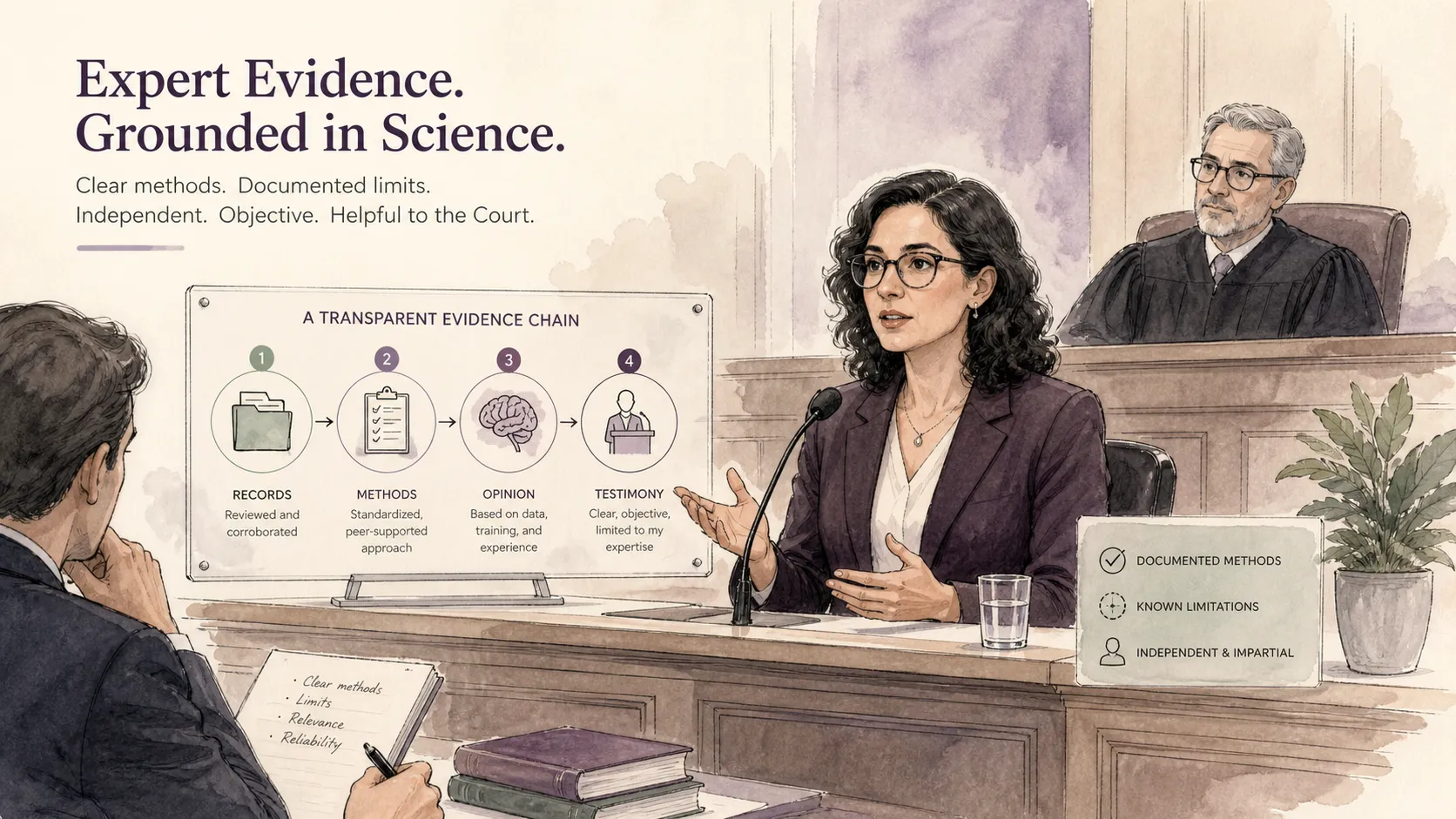
Understand how psychological experts qualify, build a defensible opinion, communicate evidence and maintain independence in legal proceedings.
Read article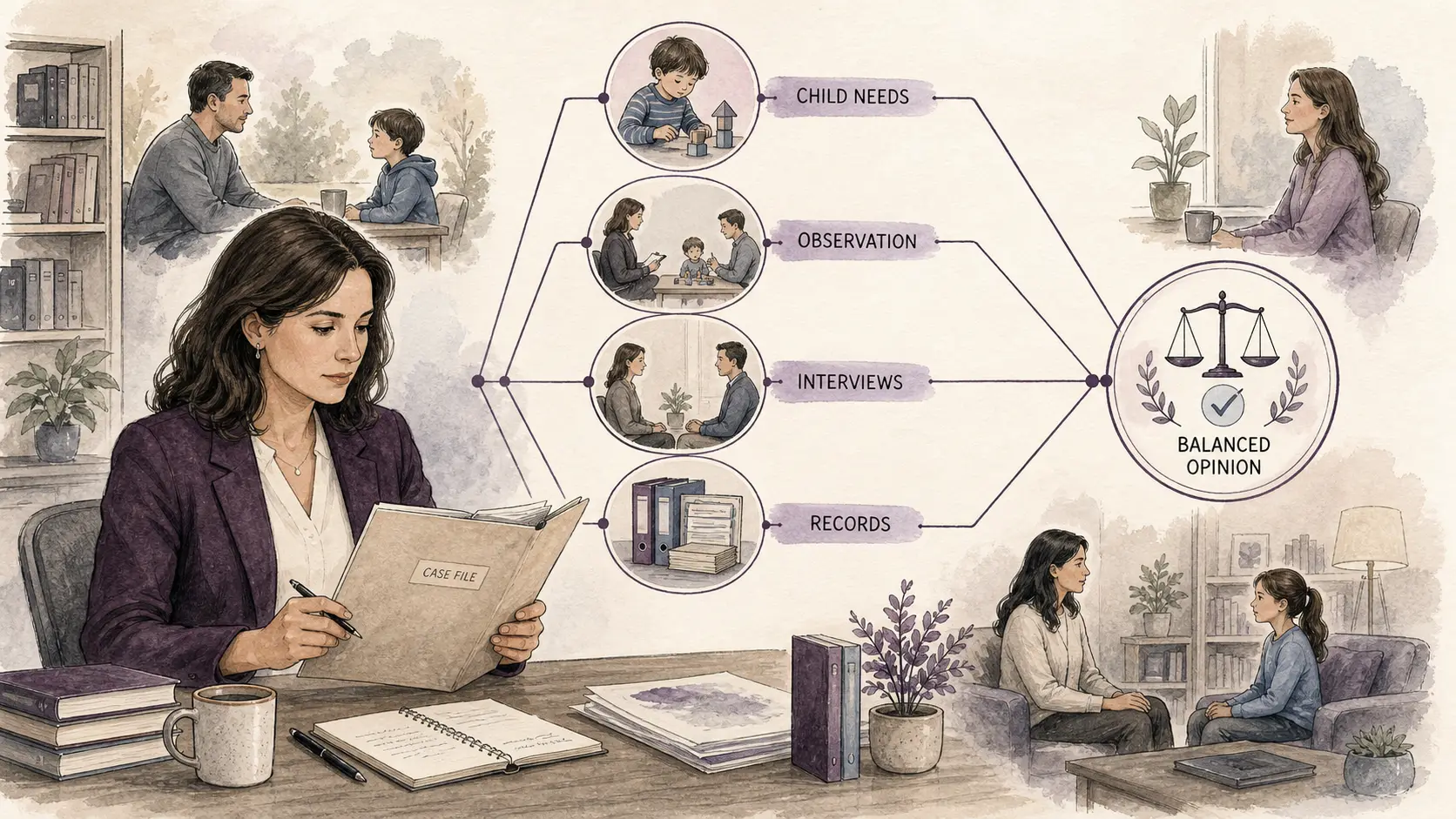
Understand what custody evaluators examine, how children and parents may be involved, what testing can add and where the evaluator's role ends.
Read article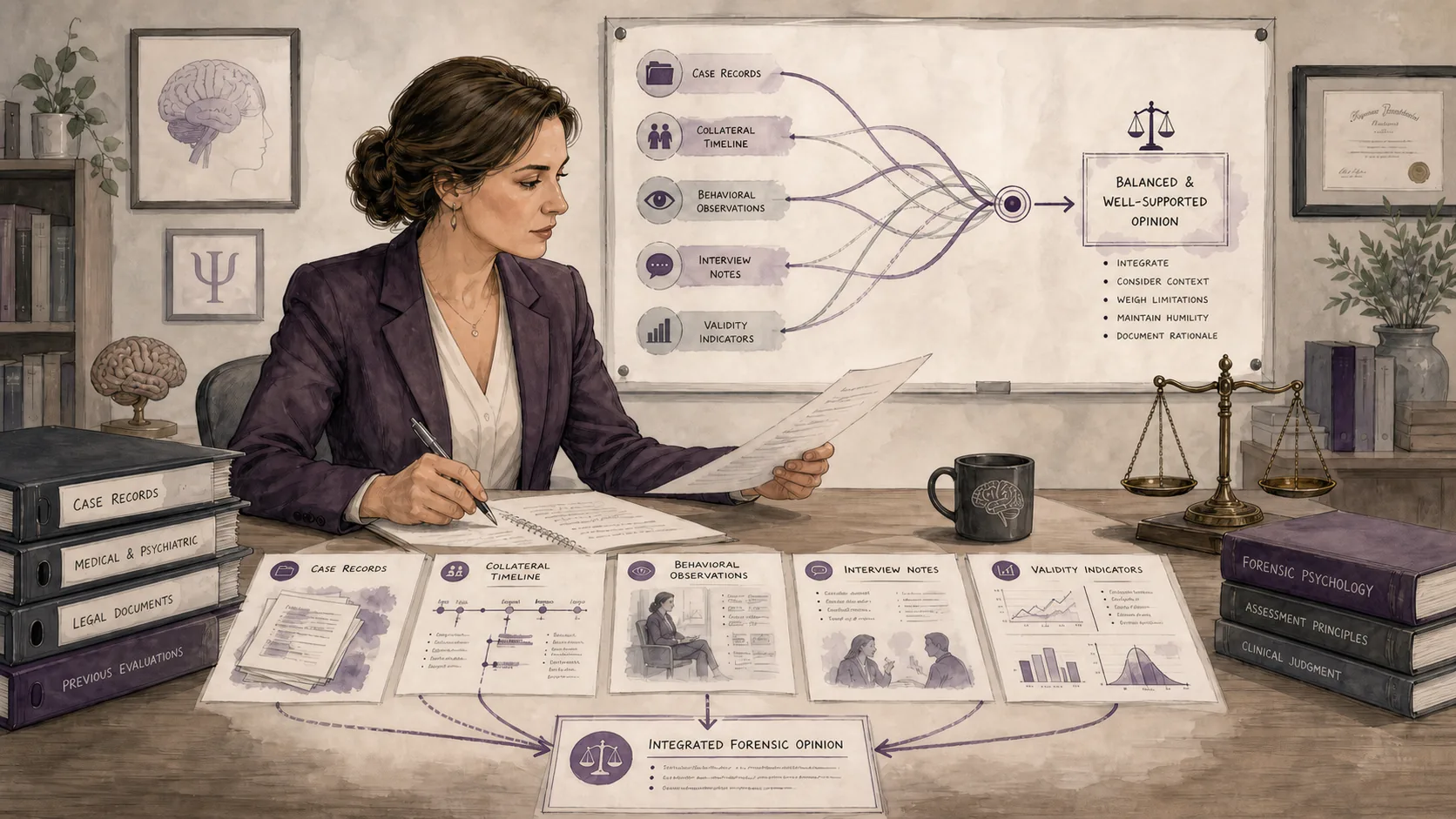
Learn how evaluators examine possible malingering through records, interviews, validity measures, alternative explanations and converging evidence.
Read article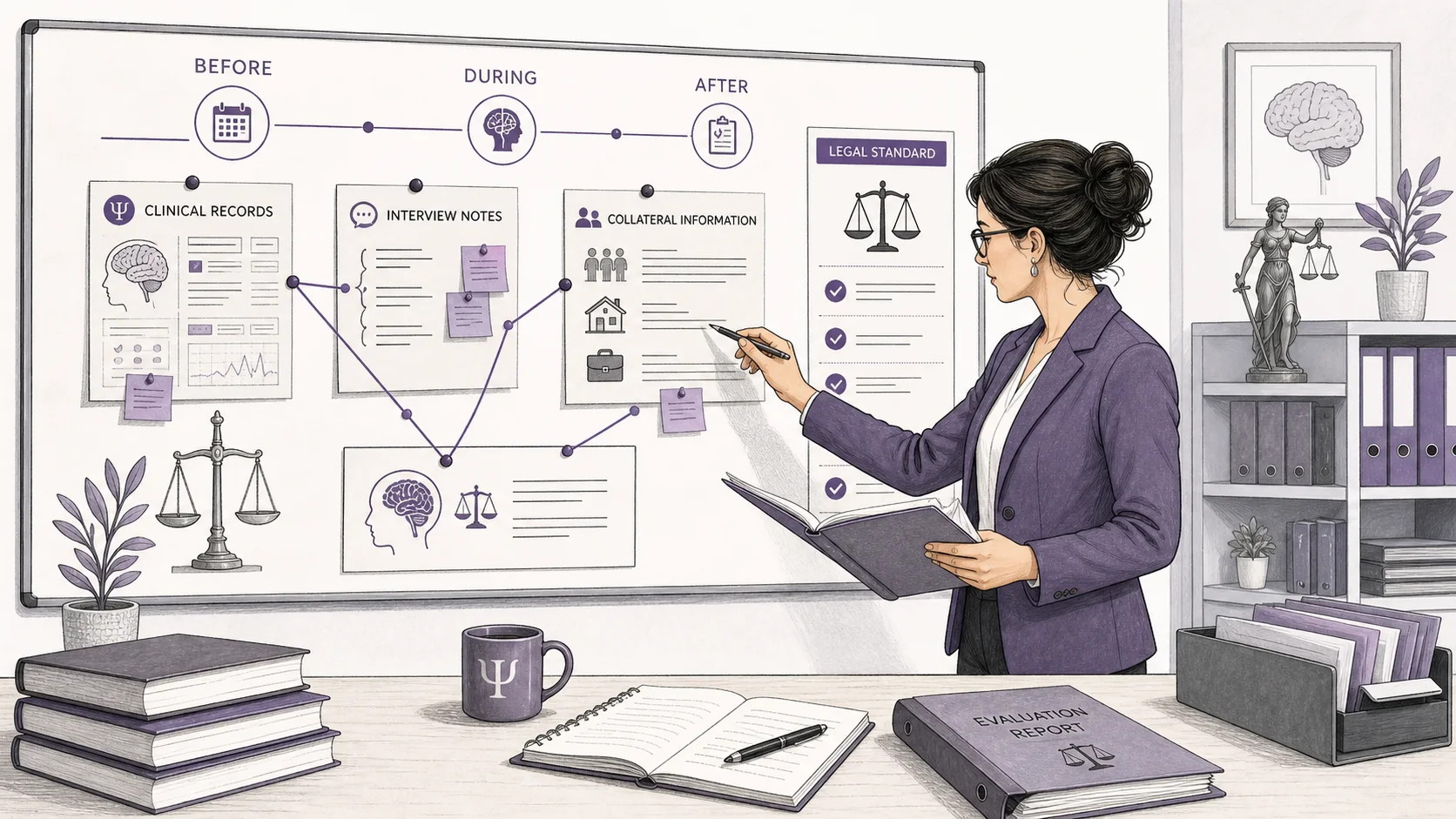
Learn how evaluators reconstruct mental condition at the alleged offense, test competing evidence and inform the court without deciding the legal issue.
Read article
Separate the EPPP, jurisdictional exams and the ABPP forensic board process before choosing a credential or preparation route.
Read article
Compare the courses, supervised experiences and credentials that support research, justice careers and licensed psychologist practice.
Read article
Decide whether a graduate certificate fits your career, degree plan and budget while avoiding common licensure and transfer assumptions.
Read article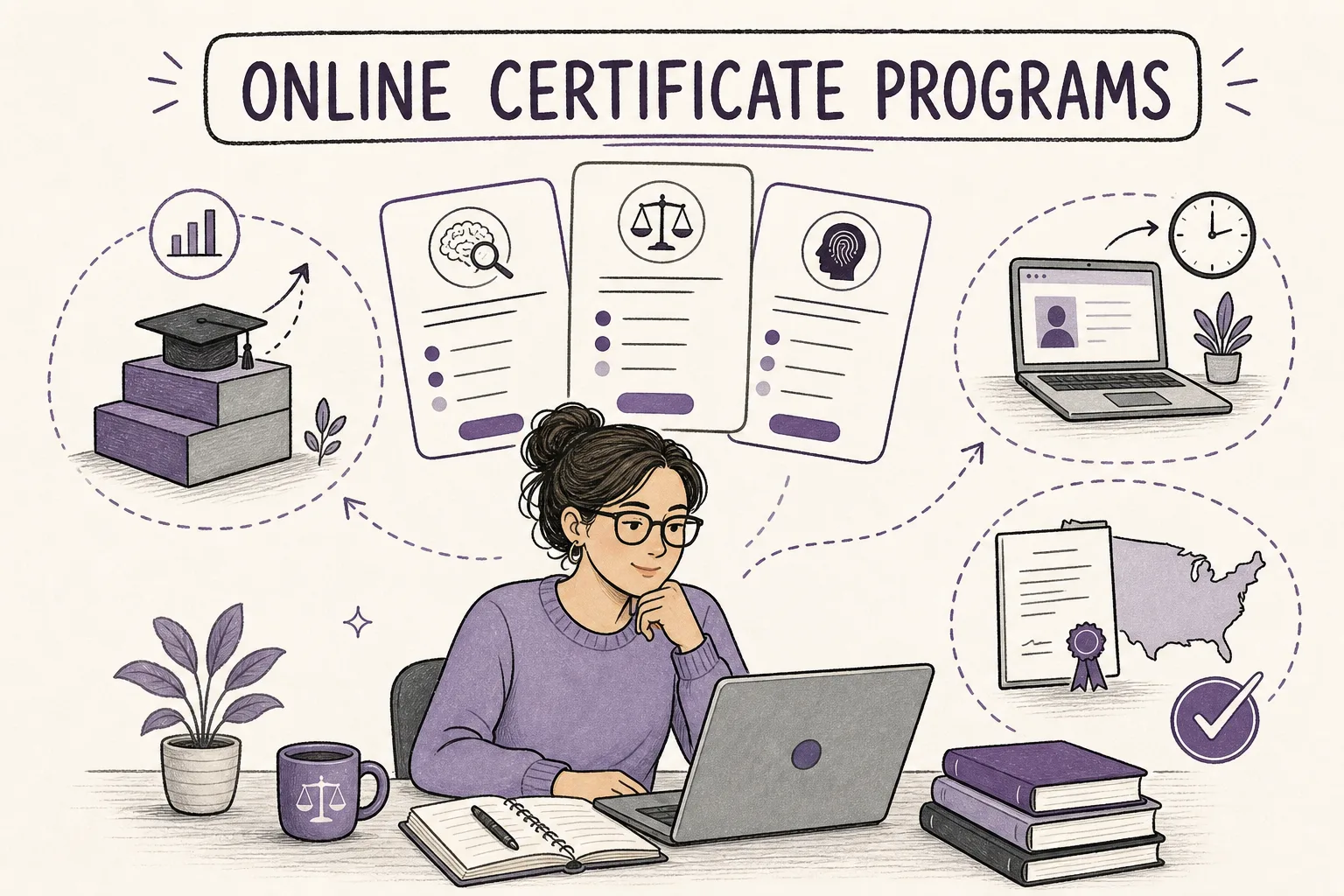
Compare verified online certificates by academic level, credits, format, cost context and licensure value before enrolling.
Read article
Separate academic certificates, psychologist licensure, ABPP board certification and examinations before choosing a credential or program.
Read article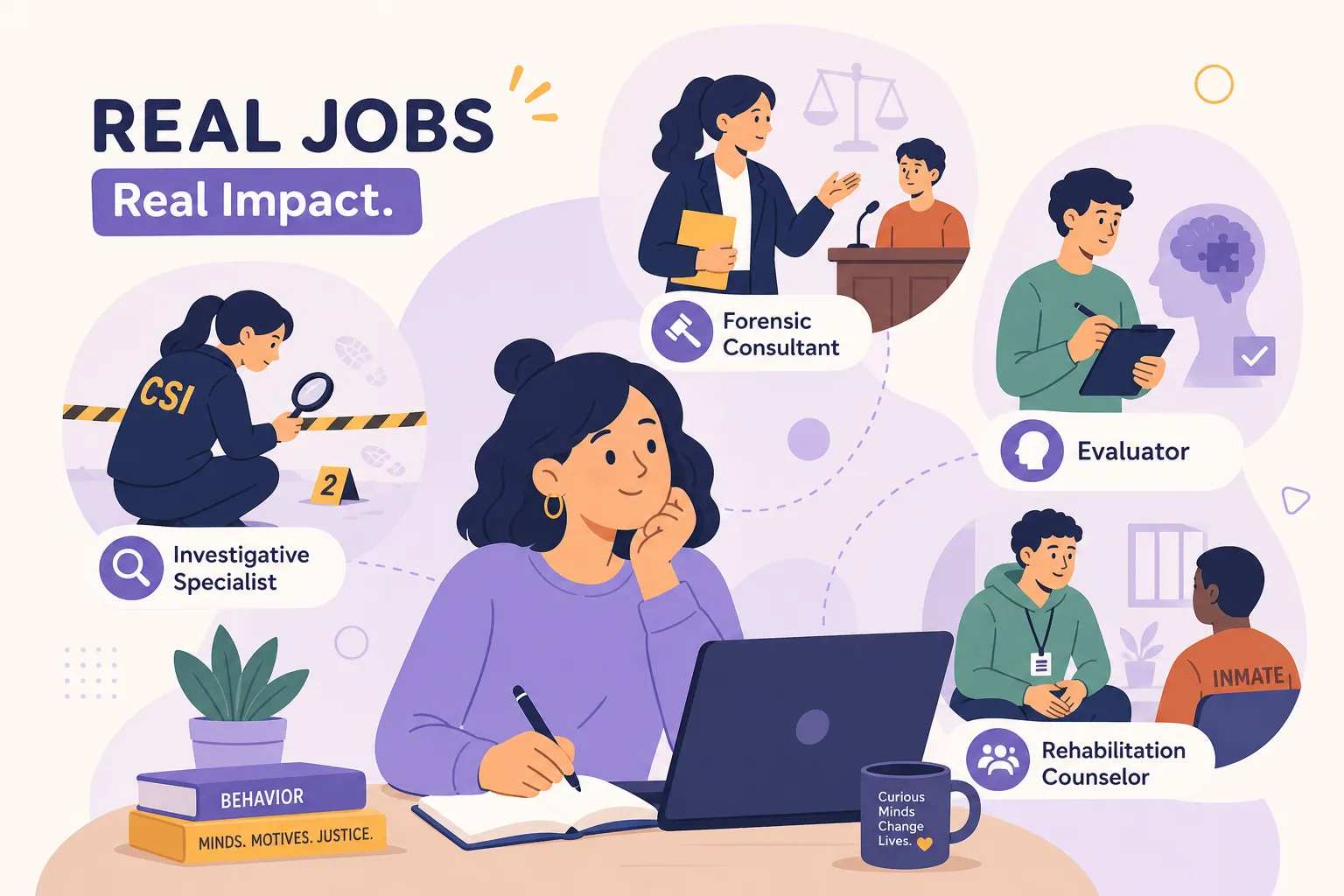
Compare real roles by degree level, duties, employers, licensure boundaries, salary context and the skills that make candidates competitive.
Read article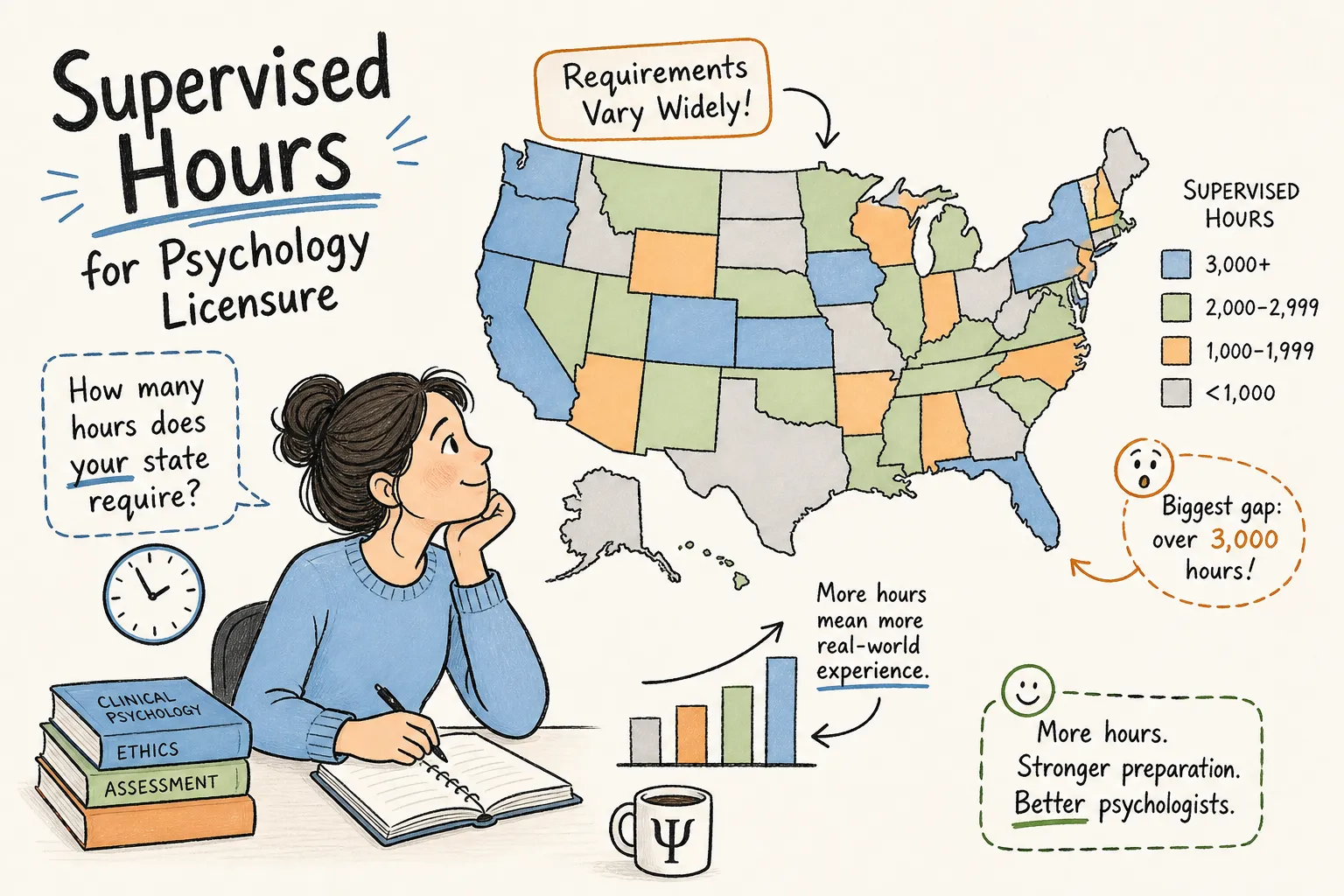
Learn why state totals differ, which experience may count and how to verify supervision rules before choosing or beginning a placement.
Read article
Learn how development shapes juvenile evaluations, legal understanding, risk decisions and interventions without replacing individualized evidence.
Read article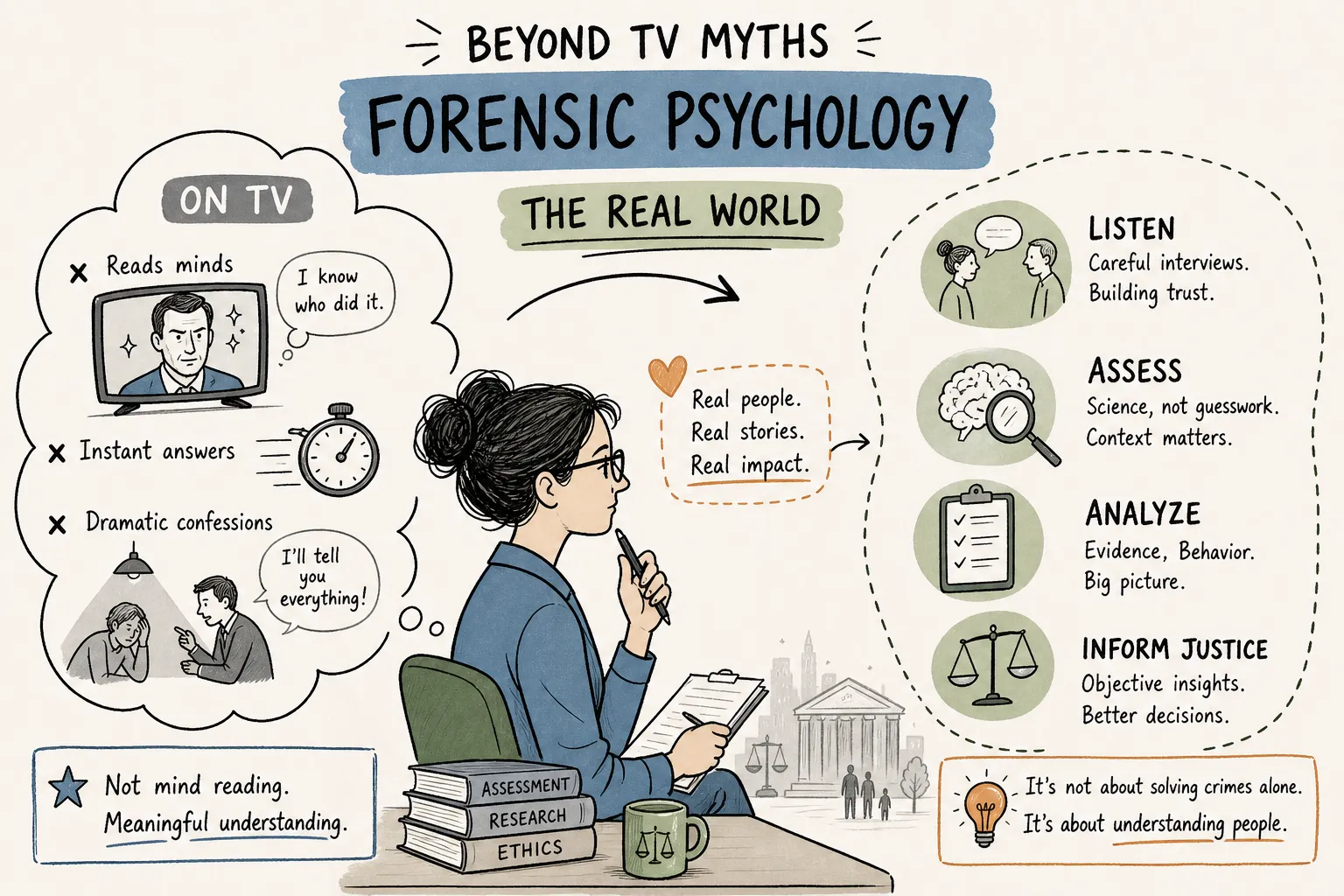
Compare television profiling with real assessment, records, report writing, consultation, testimony and the training behind professional work.
Read article
Learn what competency means, how evaluators examine present legal abilities and why the psychologist informs rather than replaces the court.
Read article
Learn how clear roles, meaningful consent, professional boundaries and bias safeguards protect people affected by forensic psychological opinions.
Read article
Learn why an honest witness can be mistaken, what reshapes recall and which identification safeguards help courts examine eyewitness evidence.
Read article
Learn how professionals organize risk factors, use structured tools and explain uncertainty without treating a probability as a certain outcome.
Read article
Learn how behavioral analysis differs from television profiling, what the evidence can support and where uncertainty and bias can enter.
Read articleFrequently asked questions
These answers explain what the blog covers, how its articles are organized and where educational information stops.
The blog explains psychological questions connected with law and justice. Current guides cover criminal profiling, violence risk assessment, eyewitness memory and professional ethics, with more evidence-based topics added over time.
The articles are written by Hassam Shabbir. Each guide is developed from research, professional standards and original institutional sources, with links provided so readers can examine important claims in context.
Articles appear from newest to oldest. The page uses each article's publication date, so a newly published guide automatically moves to the first position.
No. The blog provides general educational information. A legal standard, licensing rule or clinical decision may depend on the jurisdiction, role and facts of an individual case.
Start with What Is Forensic Psychology to understand the field. Then compare career paths and degree routes before choosing a program or assuming that one qualification leads to every forensic role.
How these guides are built
Forensic psychology can influence liberty, treatment, education and public understanding. The writing therefore needs more than a confident conclusion.
A useful answer begins by separating the legal, psychological and practical questions that may sound similar but require different evidence.
Research findings, professional standards and original institutional sources carry more weight than a dramatic example or familiar claim.
Good psychological explanation shows what the evidence supports, which alternatives remain possible and what could change the conclusion.
Need the bigger picture?
Use the main guides when your question is about the profession, a career decision or the education required for a specific role.
 Hassam Shabbir Guide Psychologist, Author, Writer & Researcher
 Automated guide to Hassam Shabbir's reviewed articles. Not Hassam, and not personal legal, clinical or case advice.
This guide points you to Hassam Shabbir's reviewed articles on forensic psychology: the field, careers, U.S. education and licensure, ethics and the evaluation process.
It is automated, not Hassam, and not personal advice. Keep questions general: no names, case details or health information.
Educational guidance only. Scope and limits