Psychology and law
Explaining how psychological evidence, professional roles and legal questions connect without treating a legal decision as a clinical conclusion.

Author and evidence reviewer
New York-licensed psychologist and forensic psychology writer
Hassam writes about psychology, law, education and professional pathways for readers who need a clear answer without false certainty. His work combines psychological training with more than eight years of professional research and writing experience.

Professional profile
Hassam Shabbir is a New York-licensed psychologist, forensic psychology writer and founder of Rise Above Minds.
His formal psychology education began in Pakistan and continued through professional study from institutions in the United States and Canada. His learning includes abnormal psychology, behavioral change, suicide prevention, psychological first aid, psychosis, relationships and school mental health.
His professional work is remote and international, including projects and clients in the United States. It centers on research, writing, content strategy and psychology-informed communication for complex health and education topics.
As founder of Rise Above Minds, he leads a nonprofit initiative that shares mental health and psychology education with children and communities. His broader writing portfolio includes more than 1,000 articles across healthcare, education, technology and other fields.
Credentials and verification
Professional license
The licensing authority identified for this credential is the New York State Education Department. Full license details and private credential documents are not displayed publicly to protect personal information.
The psychologist license is the credential stated on this page. It should not be read as a claim of separate ABPP board certification in forensic psychology or competence in every forensic matter.
Areas of focus
These areas describe the educational topics Hassam researches and explains. They do not replace case-specific assessment, legal advice or clinical care.
Explaining how psychological evidence, professional roles and legal questions connect without treating a legal decision as a clinical conclusion.
Helping readers separate degrees, supervised training, state licensure, certificates and specialty credentials before choosing a professional route.
Turning research, standards and institutional guidance into direct answers while keeping uncertainty, jurisdiction and limitations visible.
Writing about mental health and human behavior in language that supports understanding without diagnosing readers or prescribing individual care.
Role on this publication
Hassam develops the site's educational guides and reviews the evidence used to support them. The process is designed to make important limits as visible as the conclusion.
Read the complete editorial standards →Define the reader's real question and the limits of the answer.
Prioritize peer-reviewed research, government sources and professional standards.
Check licensing, legal and jurisdictional language when it changes the guidance.
Separate established evidence from interpretation and clearly mark uncertainty.
Review published work for corrections, outdated sources and needed context.
Education and continued study
Course titles and issuing institutions are shown for context. Listing a course does not imply a degree, institutional endorsement or a separate professional license.
5 completed courses
1 completed course
1 completed course
1 completed course
1 completed course
5 completed courses
Selected independent work
Psychology and faith
An Urdu book that brings psychology and Islamic teachings into conversation around mental noise, rumination, mindfulness, attention and spiritual wellbeing.
Published on Forensic Psychology
Every guide links to its sources, publication date, evidence-review date and editorial standards. Articles are listed from newest to oldest.
 01
01 Choose a feasible research question, match it to an ethical method and find documented public U.S. justice data sources.
Read article → 02
02 Compare full-time, evening and weekend schedules across courts, corrections, hospitals, government roles and private practice.
Read article → 03
03 Compare the real work, training, pay evidence, job outlook, advantages and drawbacks before deciding whether forensic psychology fits your goals.
Read article →Read, check or correct
Explore the full library, review how claims are checked or tell the publication when a source or statement needs another look.
Professional boundary
Content on this website provides general education. It does not create a psychologist-patient relationship, perform a forensic evaluation or provide legal, diagnostic or treatment advice.
Questions about an individual case should go to a qualified professional who can consider the person, records, jurisdiction and purpose of the decision.
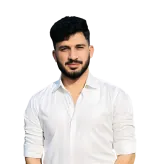 Hassam Shabbir Guide Psychologist, Author, Writer & Researcher
 Automated guide to Hassam Shabbir's reviewed articles. Not Hassam, and not personal legal, clinical or case advice.
This guide points you to Hassam Shabbir's reviewed articles on forensic psychology: the field, careers, U.S. education and licensure, ethics and the evaluation process.
It is automated, not Hassam, and not personal advice. Keep questions general: no names, case details or health information.
Educational guidance only. Scope and limits