
KEY TAKEAWAYS
- Police and public safety psychology is an APA-recognized specialty with four primary practice domains.
- The role is broader than criminal profiling and may include assessment, treatment, operational support and organizational consultation.
- BLS has no police-psychologist occupation, so broad psychologist wages must be labeled as benchmarks rather than exact salary estimates.
What is a police psychologist?
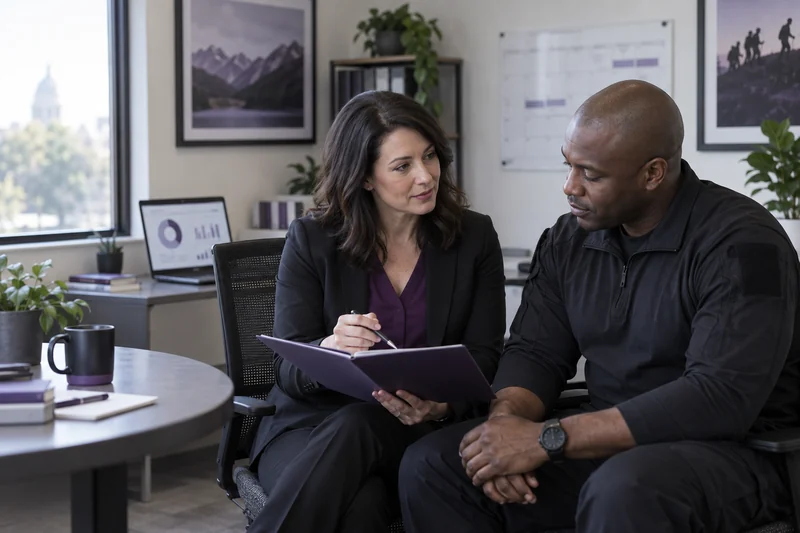
A police psychologist is generally a licensed psychologist who applies psychological science and professional practice to law-enforcement or public-safety personnel, units and agencies. APA defines the specialty through four domains: assessment, clinical intervention, operational support and organizational consultation.
The label can be misleading if it is reduced to profiling suspects. Much of the work concerns employee selection, fitness, wellness, leadership, team functioning, critical incidents and the demands of public-safety organizations. The exact service determines the required competence, records, confidentiality rules and client relationship.
Police and public safety psychology overlaps with forensic psychology, but the two are not interchangeable. Forensic practice is defined by applying psychology to a legal or administrative question. Police psychology is organized around public-safety personnel and agencies. A particular evaluation or consultation may involve both.
The four domains of police psychology
| Domain | Examples | Boundary to check |
|---|---|---|
| Assessment | Preemployment screening, specialty-assignment assessment and fitness-for-duty evaluation | Referral question, job requirements, methods and due-process protections |
| Clinical intervention | Counseling, crisis response, wellness visits and support after critical incidents | Who the client is, privacy limits and access to records |
| Operational support | Consultation related to high-risk events, negotiations, investigations or deployment demands | Evidence limits and separation from command authority |
| Organizational consultation | Leadership support, training, team development, policy input and workplace-health programs | Whether the service targets an individual, unit or agency |
One psychologist may work mainly in one or two domains. Competence in therapy does not automatically establish competence in occupational evaluation or operational consultation.
What does a police psychologist do?
- Evaluate job-related psychological suitability: use a multi-method process tied to the essential functions and risks of a public-safety position.
- Conduct fitness-for-duty evaluations: address a defined occupational question without turning the evaluation into treatment.
- Provide clinical services: support officers, dispatchers, leaders or families while explaining confidentiality and record boundaries.
- Consult after critical incidents: help agencies plan evidence-informed support without assuming that every response is pathological.
- Advise leaders and teams: address communication, resilience, workplace climate, conflict and organizational change.
- Support operations: offer psychological consultation within demonstrated competence while leaving tactical and legal authority with responsible officials.
A defensible preemployment evaluation integrates job analysis, interview data, appropriate measures and relevant records. It should not promise that a test can predict every future action.
Police psychologists may collaborate with occupational-health staff, peer-support teams, physicians, attorneys and agency leaders. Their work differs from a forensic therapist's treatment role and from a psychologist retained to provide expert testimony.
How to become a police psychologist
- Complete doctoral psychology training. Choose a program that supports the psychologist license and clinical, counseling, occupational or related competencies needed for the intended work.
- Complete supervised professional experience. Internship and postdoctoral training should provide progressively responsible work with suitable supervision.
- Meet state licensure requirements. Education, supervised hours, examinations and other requirements vary by jurisdiction.
- Build public-safety competence. Study agency culture, occupational demands, job analysis, trauma and resilience, ethics, confidentiality, employment law and relevant assessment methods.
- Seek supervised specialty experience. General psychologist licensure does not prove competence for every police assessment, clinical or operational service.
- Maintain continuing competence. Follow current professional guidelines and monitor changes in law, evidence, testing and public-safety practice.
Start with the license required for the actual duties, not a program title. The site's forensic psychologist pathway, internship guide and supervised-hours guide explain the broader training sequence.
Police psychology board certification
Police and Public Safety Psychology is an APA-recognized specialty, and the American Board of Professional Psychology offers specialty board certification through ABPPSP. Current specialty criteria include at least 100 hours of formal education and supervision and 1,000 hours of direct service or related specialty activity, in addition to ABPP's general requirements.
Board certification is different from state licensure. Licensure provides legal authority to practice within a jurisdiction and scope. Board certification is a voluntary specialty credential unless a particular employer or contract requires it. Candidates should verify current criteria directly with ABPP rather than relying on an older summary.
Police psychologist salary and job outlook
The Bureau of Labor Statistics does not publish a separate police-psychologist occupation. BLS reports a $99,110 median annual wage for psychologists in May 2025. Within the detailed categories, clinical and counseling psychologists had a $100,580 median, while psychologists classified as all other had a $110,840 median.
These figures are broad national benchmarks, not police-psychologist salary estimates. Pay may depend on public or private employment, government grade, contract structure, location, licensure, specialty experience, on-call responsibilities and whether the work is assessment, clinical, operational or organizational.
BLS projects 6% growth for psychologists from 2025 to 2035. It does not publish a separate outlook for police psychology. Current agency postings, public salary schedules and transparent contract terms provide stronger role-specific evidence than generic salary websites.
Is police psychology a good career fit?
The specialty may fit psychologists who can work across individual well-being, occupational standards and organizational systems without confusing those responsibilities. It requires calm communication, strong documentation, respect for public-safety realities and the ability to protect professional independence when agency pressure is present.
Before committing, compare the four domains. Someone drawn to therapy may dislike selection or fitness evaluations. Someone interested in operations may need more organizational and consultation training than a conventional clinical placement provides. Supervised exposure is a better test of fit than the job title alone.
This guide provides general U.S.-focused education. It is not individual licensing, clinical, legal or employment advice. Verify state-board rules, employer standards, professional guidelines and the scope of the specific assignment.
Common questions about police psychologists
What is a police psychologist?
A police psychologist is typically a licensed psychologist who applies psychological science and practice to law-enforcement or public-safety personnel and agencies. The specialty spans assessment, clinical intervention, operational support and organizational consultation. It is broader than criminal profiling.
What does a police psychologist do?
Depending on competence and assignment, duties may include preemployment evaluations, fitness-for-duty evaluations, counseling or wellness services, critical-incident support, leadership consultation, training, team development and operational consultation. One psychologist may not perform every domain.
What degree does a police psychologist need?
Independent psychologist practice generally requires a doctoral degree in psychology, supervised professional training, required examinations and state licensure. Police and public safety work also requires specialty-specific education, supervision and experience beyond general psychology training.
Is a police psychologist a forensic psychologist?
The specialties overlap but are not identical. Forensic psychology applies psychology to legal questions and proceedings. Police and public safety psychology focuses on personnel and agencies through assessment, intervention, operational support and organizational consultation. A service may involve both specialties depending on its purpose.
How much does a police psychologist make?
BLS does not publish a police-psychologist wage category. The May 2025 median for psychologists was $99,110, while psychologists classified as all other had a median of $110,840. These are broad benchmarks, not police-psychologist salary estimates.
Is board certification required for police psychologists?
ABPP board certification can demonstrate specialty competence, but it is not the same as a state license and is not a universal legal requirement. Employers and contracts may set additional qualification standards, so candidates should verify the exact position and jurisdiction.
Sources
APA, IACP, ABPP and federal labor sources were reviewed on September 27, 2026.
- American Psychological Association. Police and Public Safety Psychology.
Defines the specialty and its assessment, clinical-intervention, operational-support and organizational-consultation domains.
- American Psychological Association. Recognized Specialties, Subspecialties and Proficiencies.
Lists police and public safety psychology as an APA-recognized professional specialty.
- International Association of Chiefs of Police. Police Psychological Services Section.
Describes evidence-based police psychological services and links current professional practice guidelines.
- International Association of Chiefs of Police. Preemployment Psychological Evaluation Guidelines.
Provides a professional framework for defensible public-safety preemployment psychological evaluation programs.
- American Board of Professional Psychology. Police and Public Safety Psychology.
Describes the specialty, four practice domains and board-certification pathway.
- American Board of Professional Psychology. Specialty-Specific Requirements.
Lists current specialty education, supervision and experience requirements for board-certification eligibility.
- U.S. Bureau of Labor Statistics. Psychologists.
Provides May 2025 national wage benchmarks and 2025 to 2035 employment projections; it does not isolate police psychologists.

ABOUT THE AUTHOR
Hassam Shabbir
Hassam Shabbir is a New York-licensed psychologist and forensic psychology writer. Full license details are withheld from public display for privacy and security; legitimate professional verification requests may be submitted through the contact page.
Review author background